Failing retaining walls do not get better. They get worse, slowly, until one heavy rainstorm finishes them off. Here is how to tell whether yours can be repaired or whether it needs to come out.
The 7 visible failure signs
1) Bulging or bowing in the wall face. 2) Leaning past vertical (more than 1 inch per foot of height). 3) Stair-step cracking through block joints. 4) Water seeping through the face after rain. 5) Mortar joint failure or missing mortar. 6) Vertical separation between sections. 7) Soil washout from behind or beneath the base.
What causes retaining wall failure
Almost always one of four things: missing or clogged drainage behind the wall, undersized wall for the soil load, material failure (cheap block, no rebar in masonry walls), or undermined foundation from frost or erosion.
Repair vs replacement decision framework
Repair: small cracks, single block replacement, missing mortar, top course only. Replace: bulging, leaning, multiple structural cracks, drainage failure behind the wall, walls over 4 feet with no engineering. Our retaining wall repair team does both.
Why most repairs fail within 2-3 years
Repairs that ignore the underlying cause (drainage, soil load) fail again within 2–3 years. The crack that came back is the wall telling you it needs replacement.
Cost comparison: repair vs full replacement
Spot repair $400–$1,500. Top-course rebuild $1,200–$3,000. Full wall replacement $35–$60 per face foot, typically $4,000–$15,000+. Cheaper to replace once than repair three times.
The drainage system that should be behind every wall
Every wall over 18 inches needs gravel backfill plus a perforated drainpipe at the base, daylighted to a discharge point. Walls without this system fail from water pressure within 5–10 years. Our drainage solutions service is part of every wall replacement.
Permits and engineering for walls over 4 feet in Maryland
Walls over 4 feet (measured from the bottom of footing to the top of wall) require a permit and stamped engineering in most Maryland jurisdictions including Harford County.
DIY vs professional
DIY OK: walls under 30 inches, dry-stack or short paver walls. Hire out: walls over 30 inches, walls retaining structures or driveways, walls with drainage behind them, any wall that has already failed once.
How to choose materials for the replacement
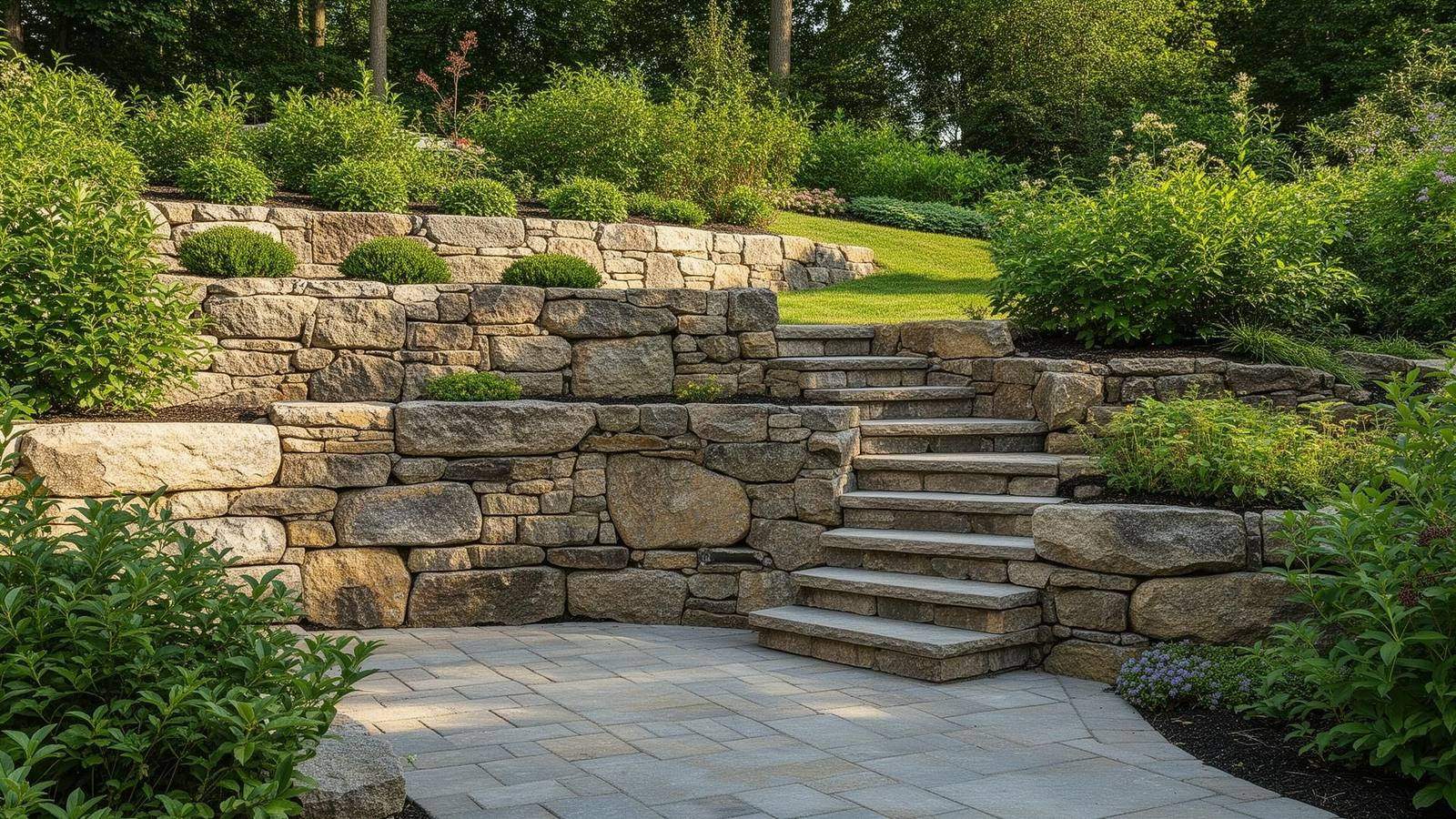
Segmental retaining wall block (Versa-Lok, Allan Block, Belgard) is the standard for most residential walls. Natural stone is more expensive but lasts indefinitely. Boulder walls work for long, low rural walls. Avoid landscape timbers — they rot in 10–15 years in Maryland.
Timeline: how long replacement takes
Most residential wall replacements run 4–10 days from demo to finish. Larger or engineered walls can take 2–4 weeks. Our hardscaping team typically combines wall replacement with drainage and patio work.
About the Author
Green Hive Crew is part of the Green Hive Landscaping team in Fallston, Maryland. We do this work every day across Bel Air and Harford County. If something here did not match your situation, call us — we will walk it with you.